


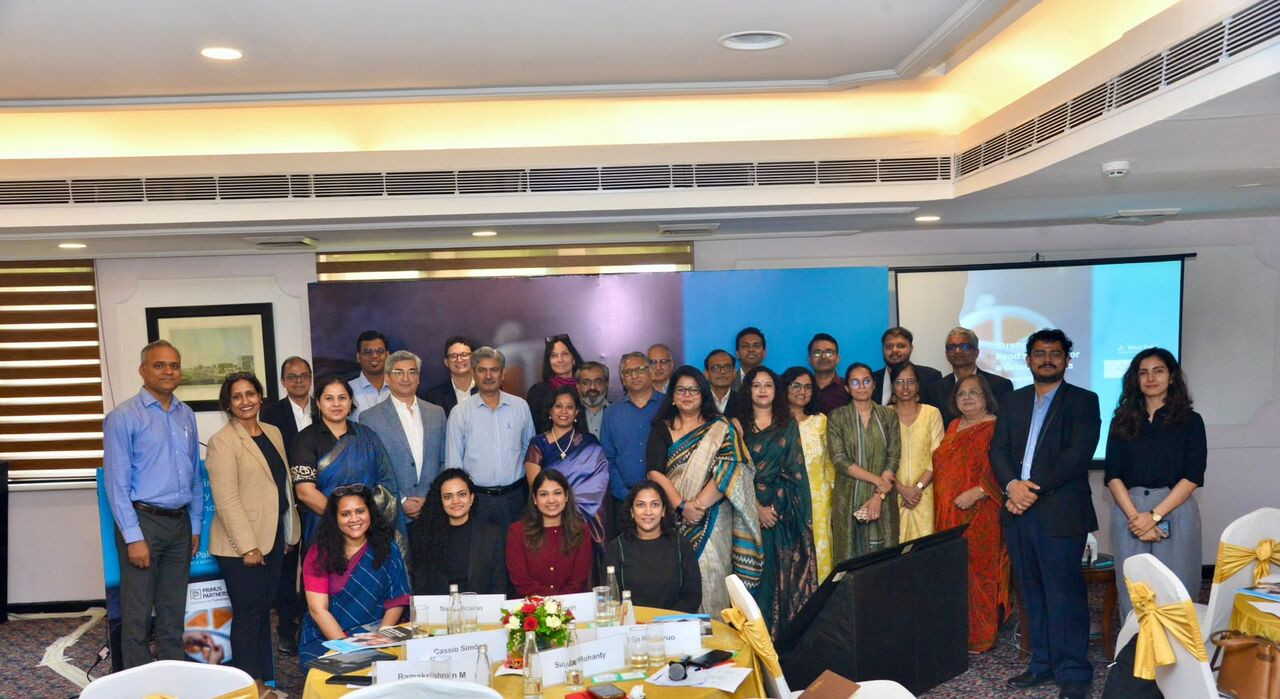
On August 19, 2026, Tetra Pak, in collaboration with the International Council for Circular Economy (ICCE) and Primus Partners, convened a leadership workshop in New Delhi on ‘Strengthening Food Security for a Growing India.’ Bringing together policymakers, industry leaders, academia, research institutions, multilateral organizations and development partners, the workshop provided a platform for dialogue on building more resilient, efficient and sustainable food systems. The event featured participation from leading organizations including NIFTEM, ICAR, TERI, UNIDO, Nestlé, PepsiCo, BASF, IFPRI and the Good Food Institute (GFI), among others. The discussions opened with a keynote by Shri Siraj Hussain, Former Secretary, Ministry of Food Processing Industries and Ministry of Agriculture & Farmers Welfare, who highlighted the importance of moving beyond production to focus on preservation, processing and supply-chain systems to minimize food losses. Dr. Rajbir Singh, Deputy Director General (Agricultural Extension), ICAR, further emphasized the need to reduce post-harvest losses from the current 15–20% to around 5% by 2047, alongside improvements in mechanization, nutrient-use efficiency and water-use efficiency.
A key focus of the workshop was strengthening the ‘critical middle’ of India’s food value chain-the infrastructure and systems that connect agricultural production with consumption, including aggregation, processing, packaging, storage, logistics and distribution. Participants explored opportunities to strengthen collaboration across the value chain, expand farmer access to technology and markets, leverage digital solutions, and scale circular and sustainable approaches to food systems. The discussions also highlighted the importance of granular data and measurable targets to better identify food loss and waste hotspots, guide targeted interventions, and track progress, including the potential role of Food Loss and Waste (FLW) reduction targets within India’s climate commitments.
The event also marked the launch of the NIFTEM–Tetra Pak report, ‘GHG Emissions from Food Loss and Waste,’ which examines the climate implications of food loss and waste in India and underscores the importance of reducing FLW as a pathway to strengthening food security and advancing climate action. The workshop concluded with a shared commitment among stakeholders to deepen cross-sector collaboration, strengthen evidence-based policymaking, accelerate investment and innovation across the critical middle, and identify actionable pathways towards a more resilient and sustainable food ecosystem for India.